Notes from Israel
Sandboarding in the Negev, a spring at the bottom of a canyon, and an afternoon at the Nova memorial in Re'im. What a Root One summer with the JCH and Kings Bay Y actually taught me.
I have been trying to write this one for a few days now, mostly on a bus, mostly badly. I am in Israel on a Root One trip with the JCH and Kings Bay Y, and every time I sit down to describe it I end up with a list of the food, the heat, the group chat, the 6 a.m. wake-ups, when the actual story is what happened to my head while I was here.
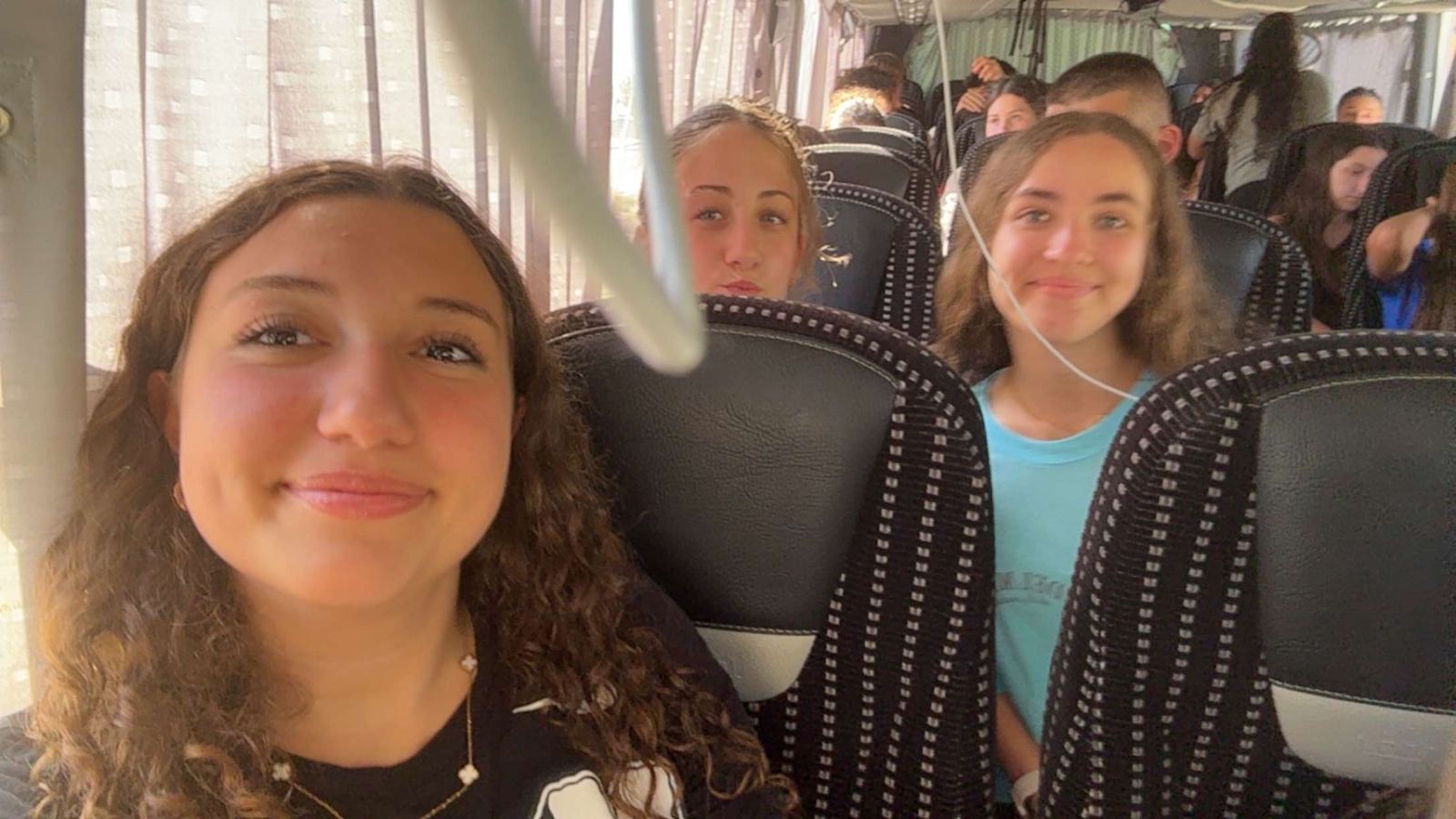
So: the list first, and then the part I actually want to say.
The desert teaches you fast
We went sandboarding in the Negev. If you have never done it, the short version is that you climb a dune, which is much harder than it sounds because the sand takes back half of every step, and then you point a beat-up snowboard downhill and hope.
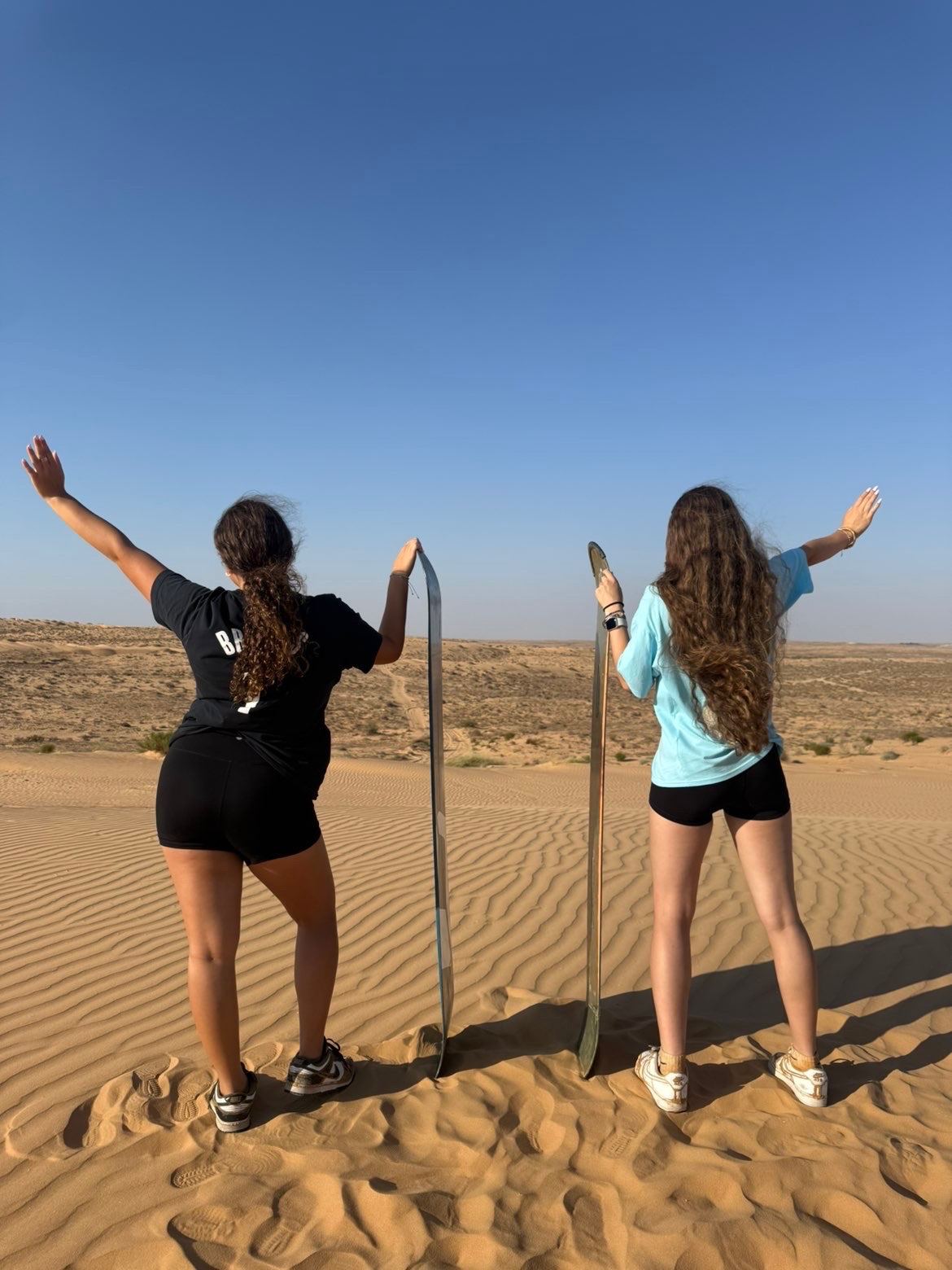
I fell constantly. Everyone fell constantly. There is something very funny about a group of teenagers from Brooklyn discovering, one at a time, that sand is not snow.
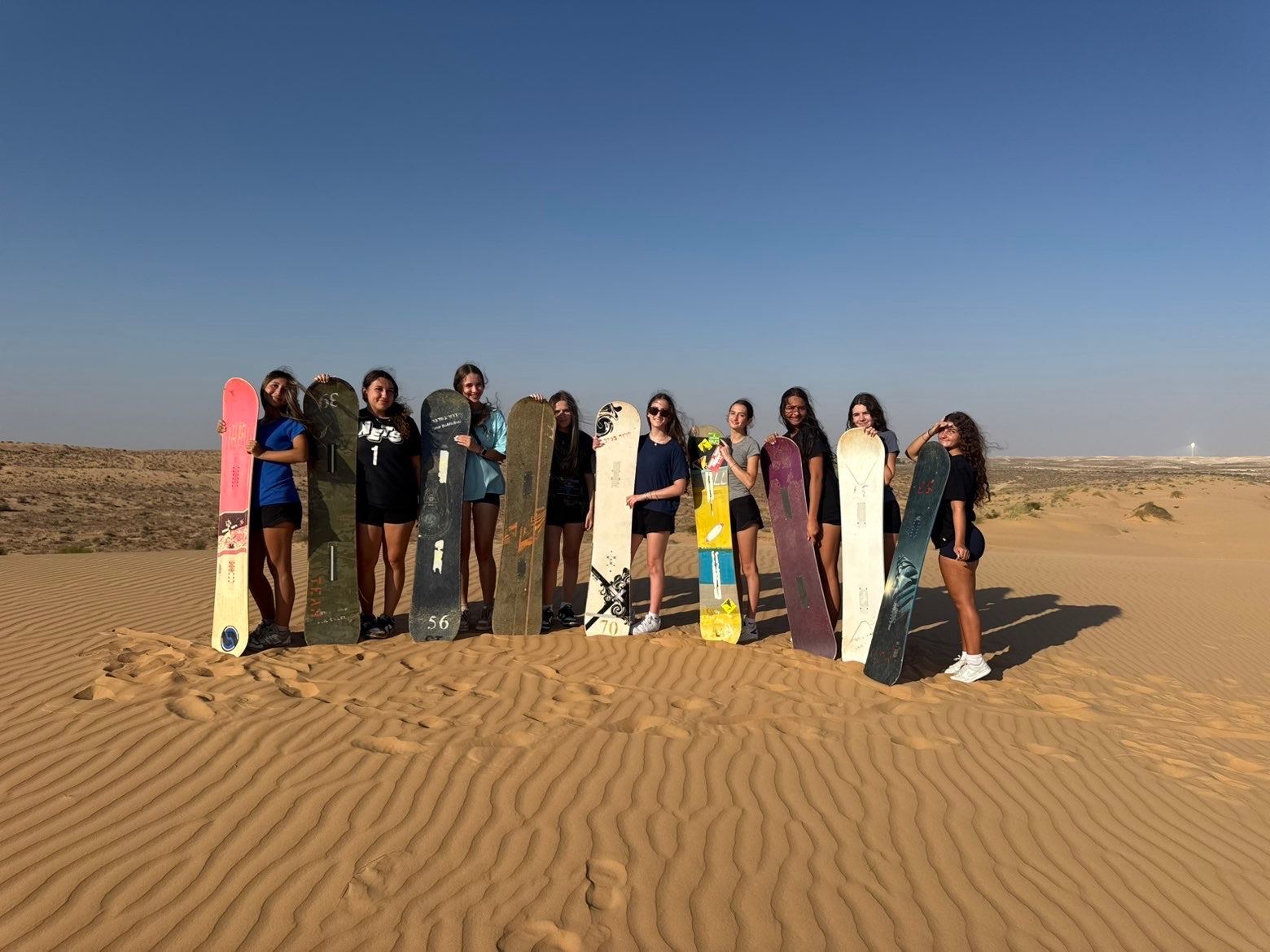
What I did not expect was how quiet it is up there. You get to the top and the wind is doing this thing where it moves the surface of the dune in ripples, and you realize the pattern under your sneakers was made this morning and will be gone by tonight. Nothing about that landscape is permanent, and it has been there for thousands of years anyway. Both of those are true at once.
Water where there should not be any
A few days later we hiked into a canyon and there was a spring at the bottom of it: actual cold water, actual green, walls of rock going straight up on both sides.
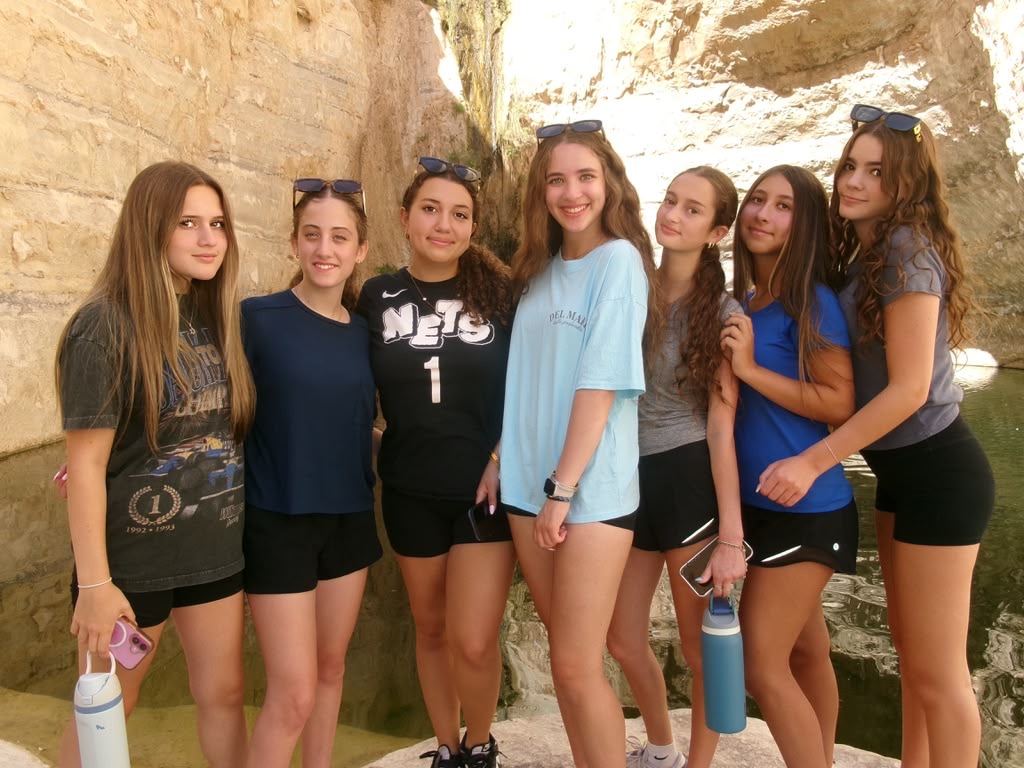
I have read about desert springs in a textbook. Reading that a place exists and standing in it with wet sneakers are not the same kind of knowing, and I think that gap is most of what this trip has been about.
Re'im
The hardest day was the Nova festival memorial at Re'im.
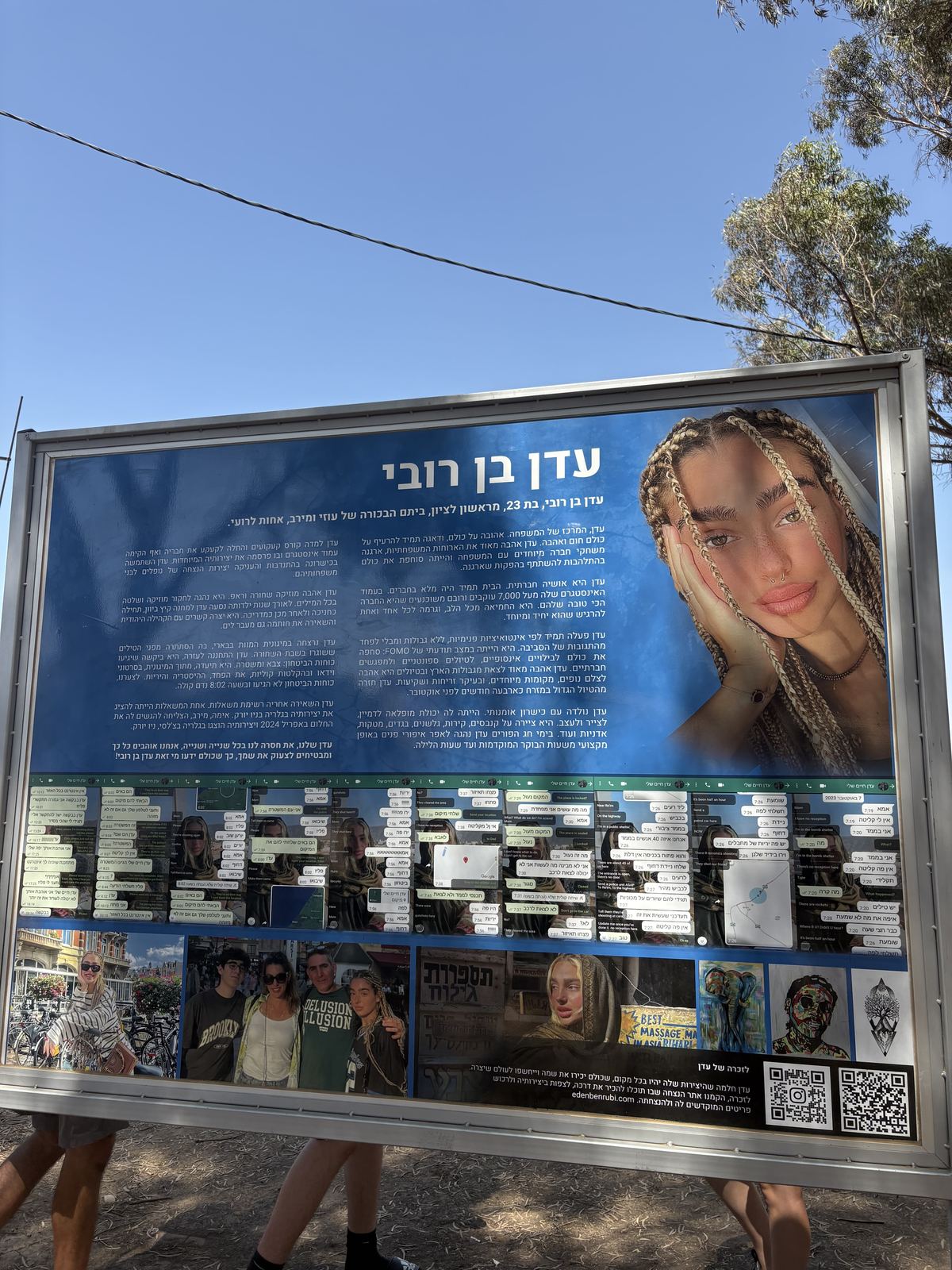
I knew the number before I came. Most people my age know the number. What I did not know is what the site actually is: a field of individual memorials, one for each person who was murdered there on October 7th, each one a board with their face on it and their story written out in Hebrew and English. Real flowers and ceramic ones. Families still come.
You cannot take in a number. You can take in a person, so that is what the site makes you do. You walk from board to board and you read.
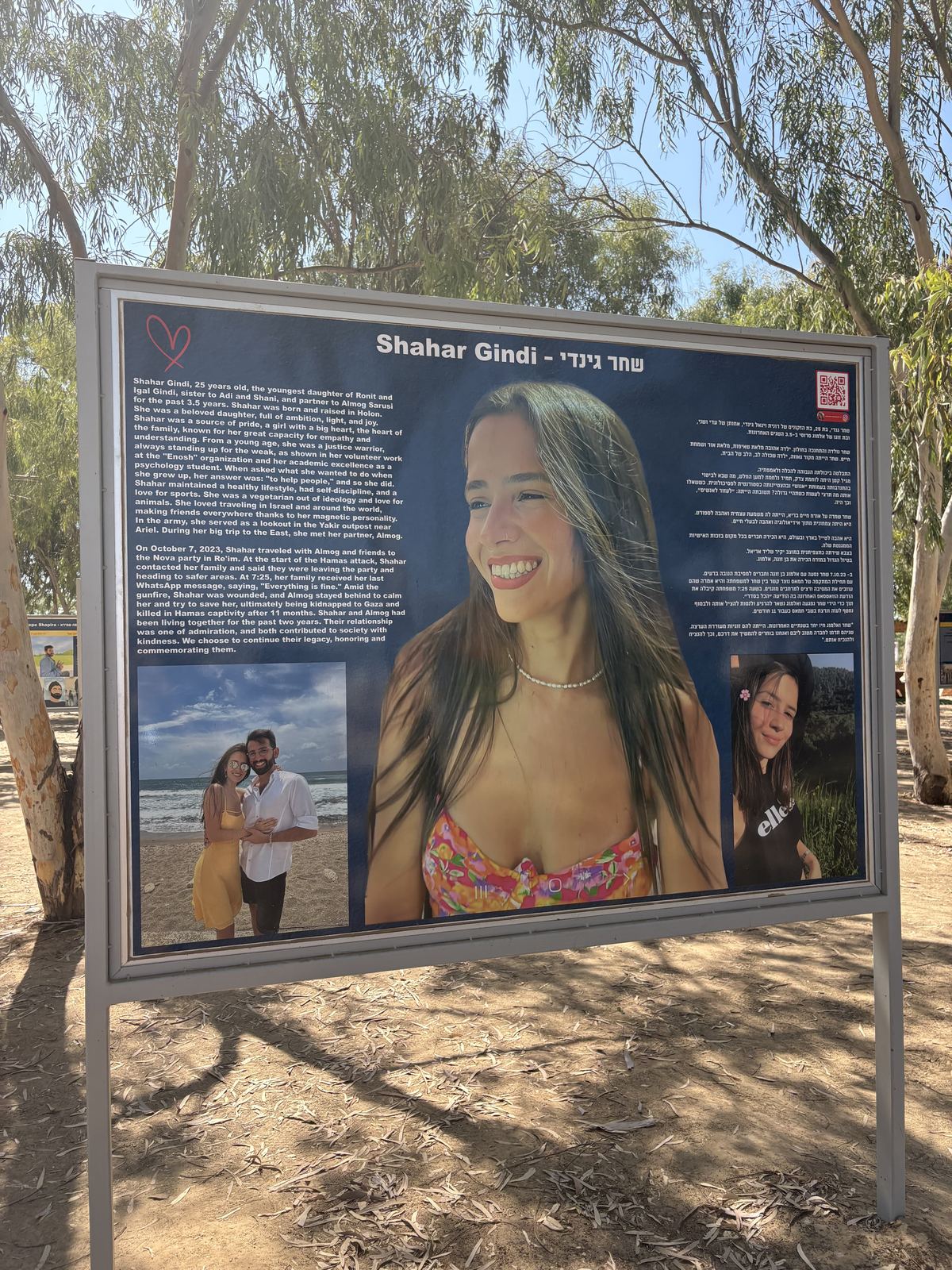
Shahar Gindi was twenty-five, the youngest daughter in her family, a psychology student. Her board says that when she was little and people asked what she wanted to do when she grew up, she answered, "to help people." That is the sentence I say in interviews. That is the sentence on my own applications. Reading it on a memorial board did something to me that I am still working out.
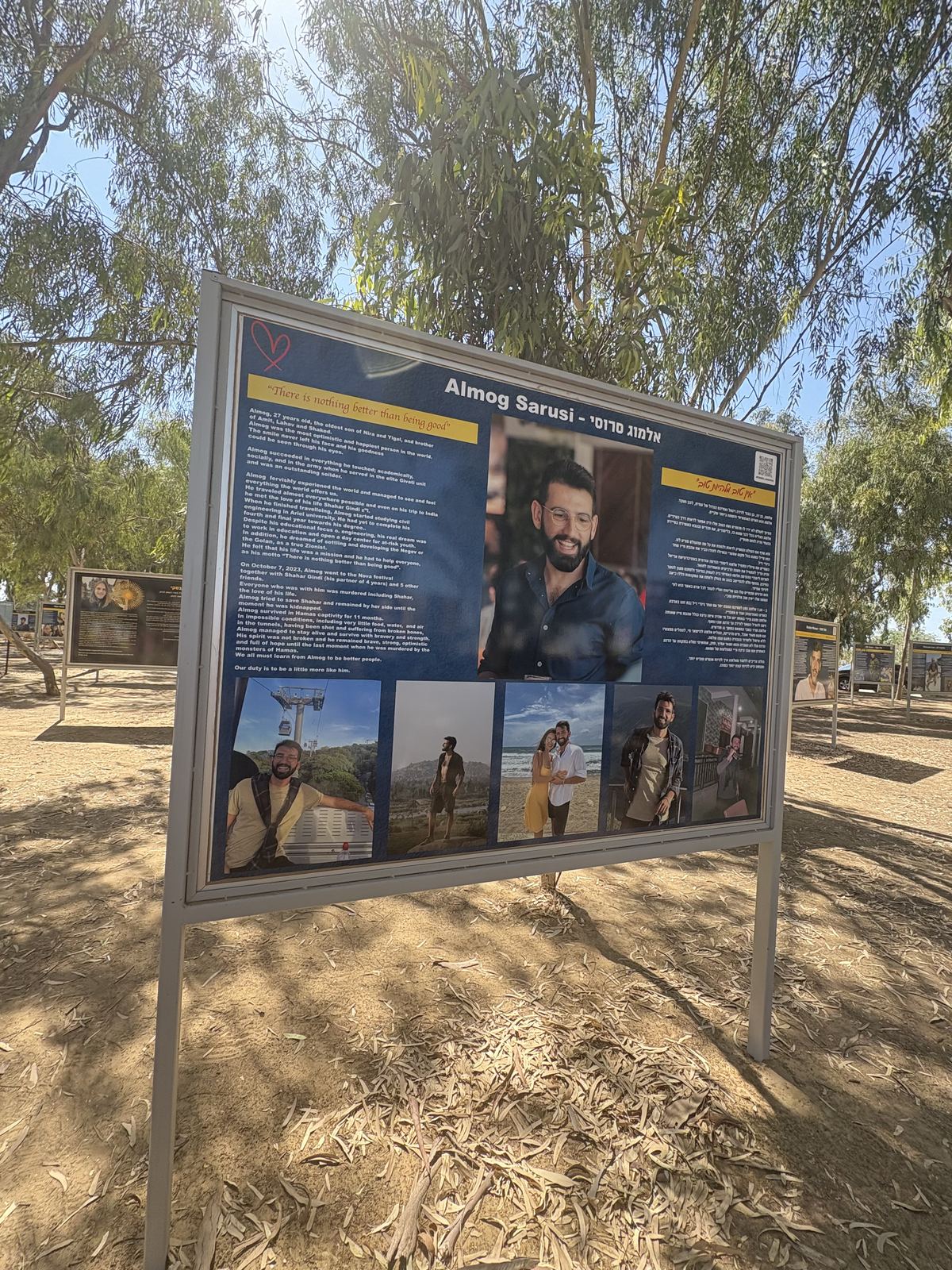
A few boards down was Almog Sarusi, her partner of four years. He was wounded and he stayed with her anyway, trying to keep her calm, and he was taken to Gaza and killed there after eleven months. His board is headed with something he used to say: "There is nothing better than being good." At the bottom, his family wrote: "We all must learn from Almog to be better people. Our duty is to be a little more like him."
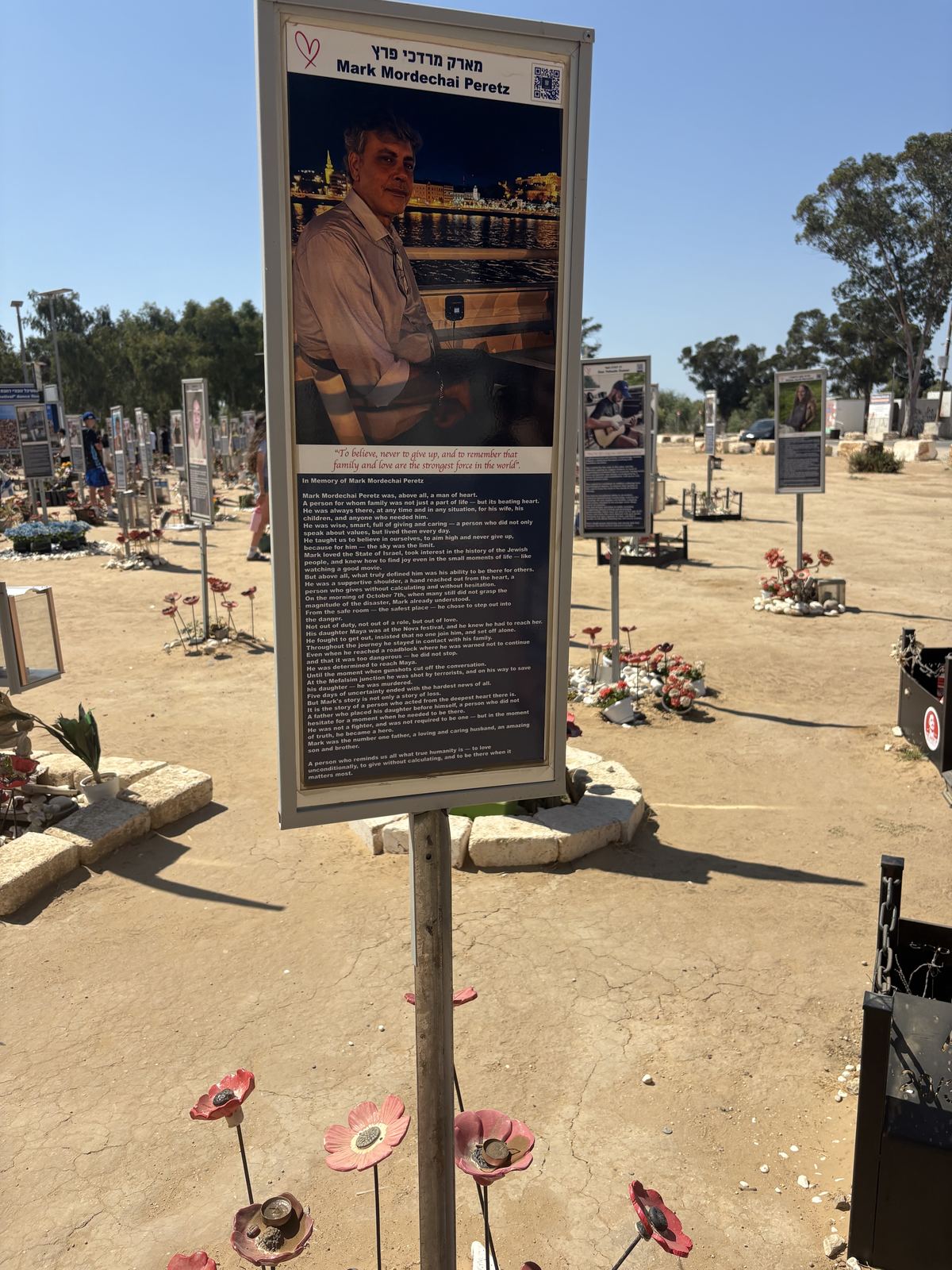
Amit Cohen was the first one out of the car to defend his friends. Mark Mordechai Peretz was not at the festival at all. His daughter was, and he got in his car and drove toward her, and he was killed on the way. His memorial quotes him: "To believe, never to give up, and to remember that family and love are the strongest force in the world."
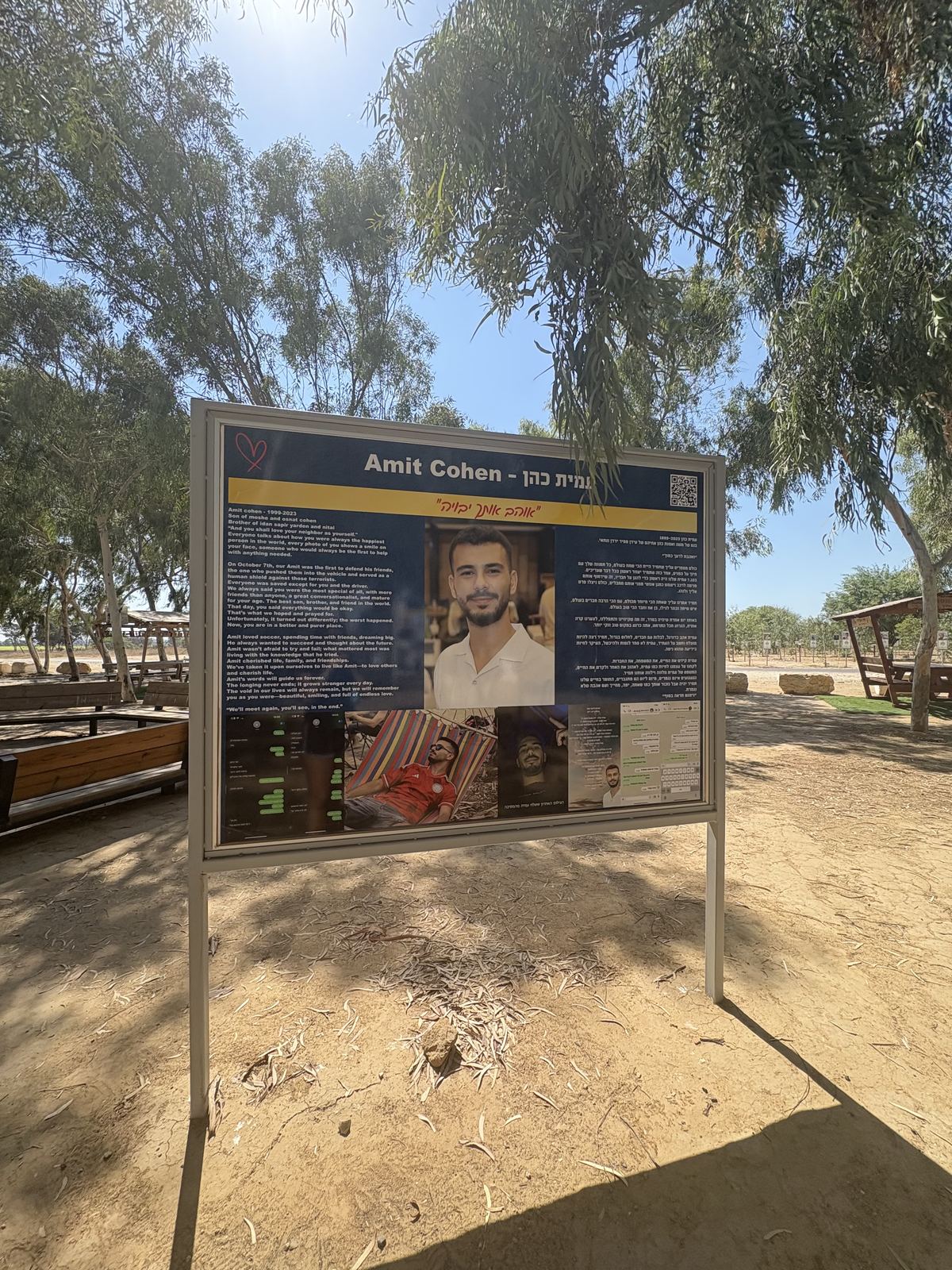
I stood there for a long time and could not make myself move faster.
What I am taking home
I want to be a physician-scientist. Most of what I do in a year is about mechanism: how a thing works, what goes wrong, what you can measure. Re'im was a reminder that mechanism is only ever half of it. Every one of those boards is a chart, in a sense: a life reduced to a page. And the whole point of the site is that the page is not the person. Someone who loved them had to sit down and choose which parts to write.
That is the skill I want. Not just reading the chart, but reading past it, to the person who is somewhere behind it. You cannot learn that from a textbook and I am not sure you can learn it in a classroom either. I think you learn it by standing in front of somebody's actual life and refusing to look away.
The other thing I am taking home is these people.
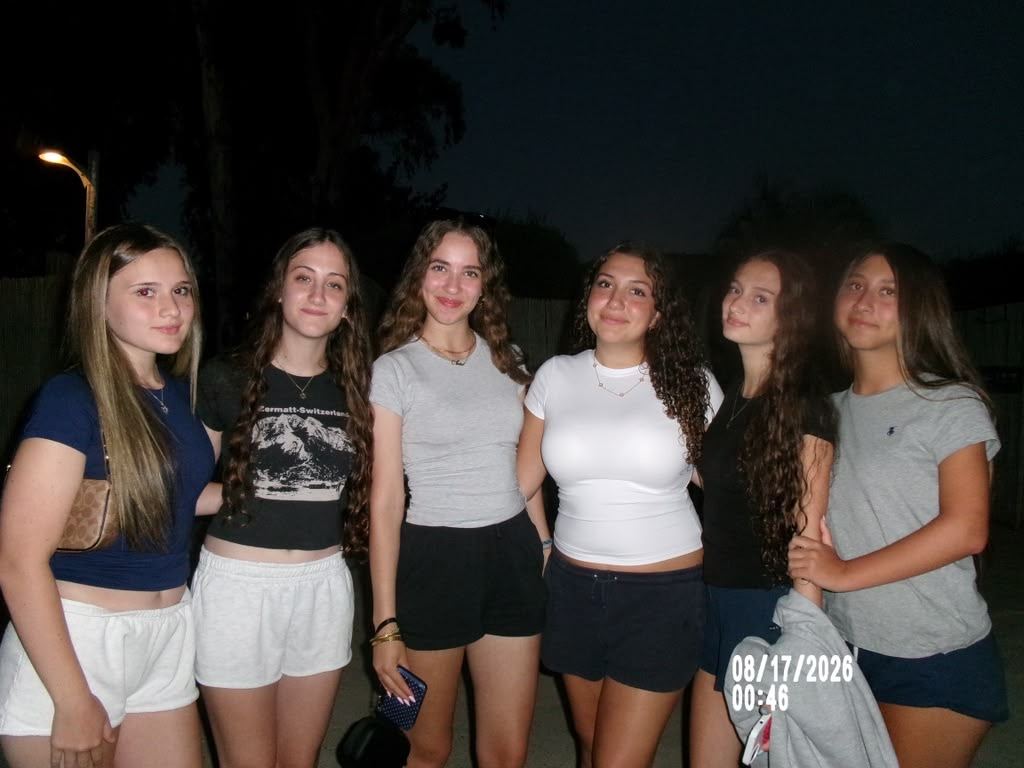
We started as a bus full of strangers with one thing in common and turned into whatever this is. We laughed until we could not breathe on the same day we cried at Re'im, which felt wrong for about ten minutes and then felt exactly right. I think being able to hold both is the entire lesson.
Thank you to Root One, to the JCH and Kings Bay Y, to our guides, and to everyone who made this happen. I came here thinking I was going to see a country. I did, but mostly I met people, some of them alive and some of them only on a board in a field in the Negev, and I do not think I will be the same student when I get back.
עם ישראל חי.